

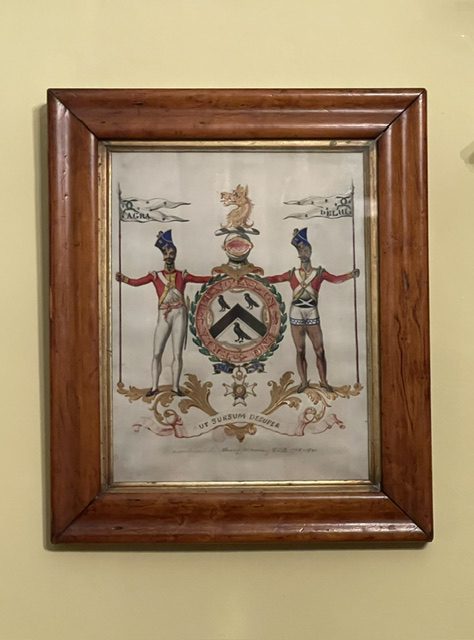
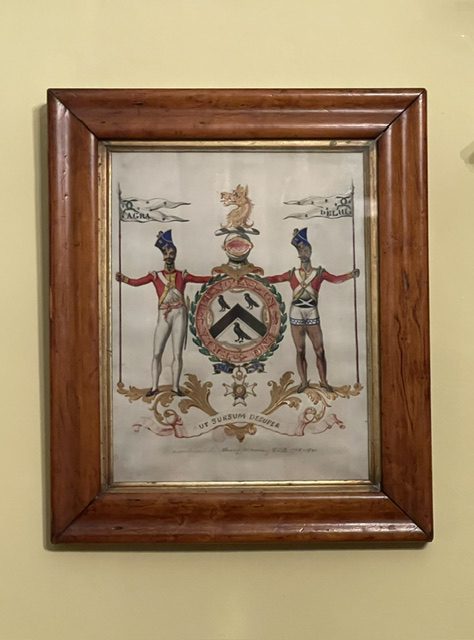
Arms of Major-General Sir George Horsley, G.C.B. of the East India Company, c 1820
£1,750.00
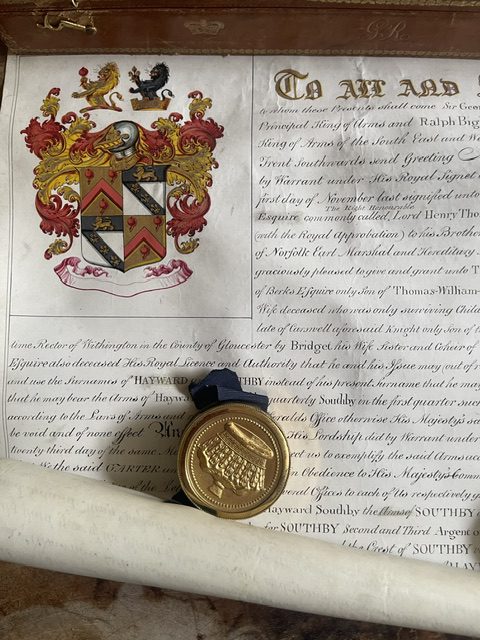
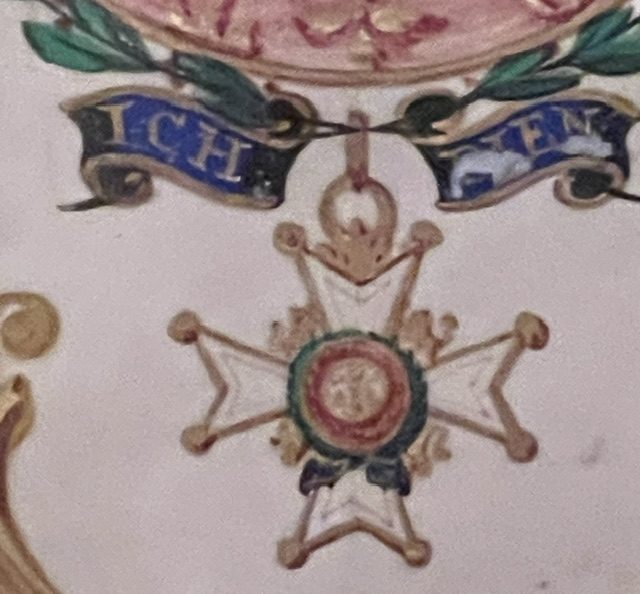
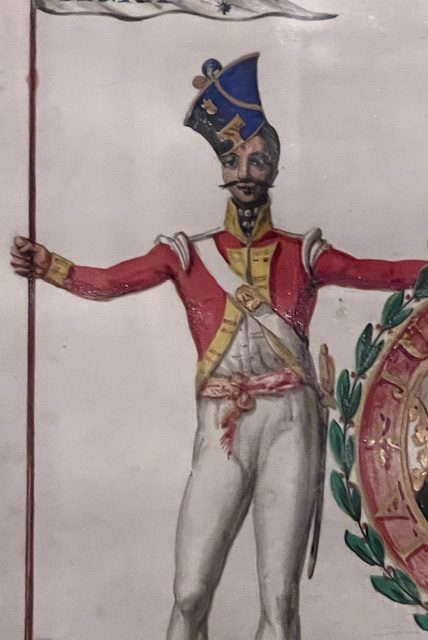
A very attractive, hand painted coat of arms reflecting the service of Major-General Sir Henry Worsley in the East India Company from the 1780 to the 1820s. The painting, with gold leaf detail, measures approxinately 8 x 6 ins and is almost certainly on vellum and cut from the original grant of arms, probably created on his award of knighthood as K.C.B. in 1821. It is now presented in a glazed maple frame, appropriate to the period but probably later. The central shield shows the three falcons of the Hampshire Worsley arms and the crest of a wolf’s head has its torse on a helm indicating knighthood. However the more dramatic parts of the design reflect Sir Henry’s career. The two supporters are, on the right, an Indian infantry officer of the Company and, on the right, a Sepoy. The officer holds a lance with a pennon commemorating the Battle at Agra and the sepoy another commemorating the Battle of Delhi [1803]. The circlet around the shield bears the Tria juncta in uno motto of the Order of the Bath and the badge of his order is shown pendant from a wreath of laurel. The description in ink beneath the arms has been added later, probably when the achievement was cut from the document. At the young age of 14 Worsley sailed for Calcutta but landed firstly at Madras where he helped when Fort St. George was under siege by Hyder Ali of Mysore. On arrival in Bengal he was initially posted to the 2nd European Regiment but in 1782 as a lieutenant he was sent with the 30th NI to sppress rebels near Benares. In the 1790s he was in the the Mysore War and at the major battle of Seringapatam. In 1803 he was a captain in the 15th NI and serving in the 2nd Mahratta War, seeing action at Alighar, Delhi [commanding his regiment], Agra, and Laswarree. By 1808 he was a Lieutenant Colonel and Adjutant General but in 1810 ill health forced him to retire. In 1813 the Governor General, the Marquis of Hastings, appointed Worsley as his Private Secretary. In 1818 he was Secretary to the Government in the Military Department but soon after poor health led to his final retirement to England in 1819. Had he not died before the issue of the Army of India Medal he would have had an impressive array of clasps. aug30/1
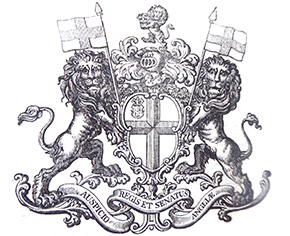
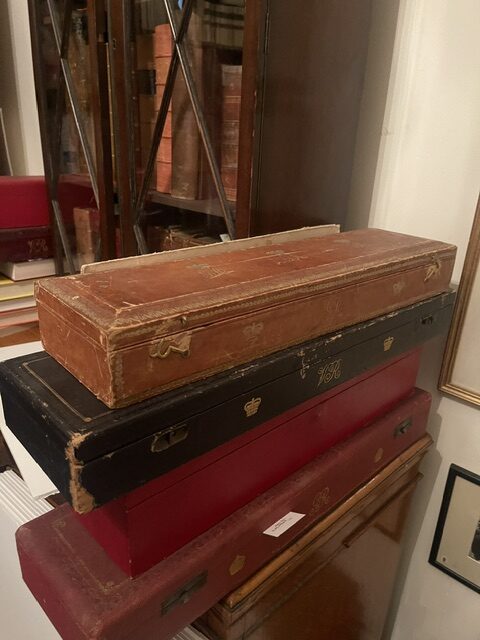
Major-General Sir Henry Worsley, G.C.B. [1768-1841]was born at Appledurcumb House on the Isle of Wight, the son of the Reverend Francis Worsley. Our illustrations for this item include a couple of views of a complete grant of arms to another recipient but of the same size and also awarded during the reign of George IV. Another illustration shows the red leather box in whhich such awards were issued until the mourning black version was introduced on the death of Prince Albert.
1 in stock
Related products
-
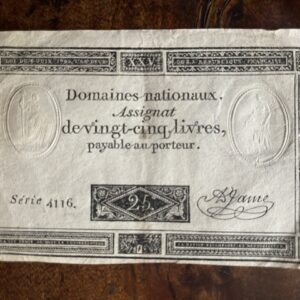
Assignat from the 1790s This example is for 25 Livres
£20.00 Add to cart -
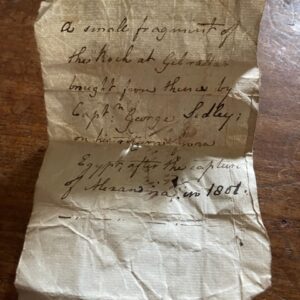
A Coldstream Guards officer’s memento brought home after the capture of Alexandria in 1891
£18.00 Add to cart -
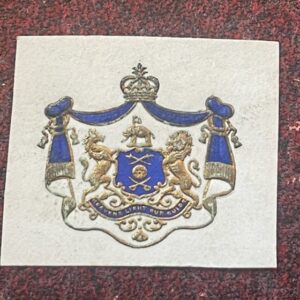
Indian embossed crest of Patiala with the motto of the Star of India
£14.00 Add to cart -
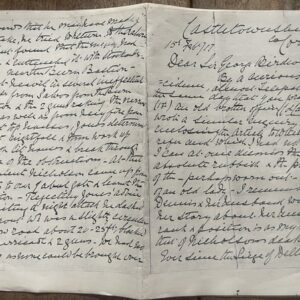
Delhi & the Mutiny. A manuscript letter from Colonel Kendal Coghill about the death of John Nicholson at the storming of Delhi in 1857
£75.00 Add to cart